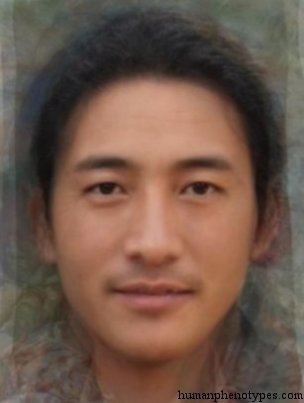
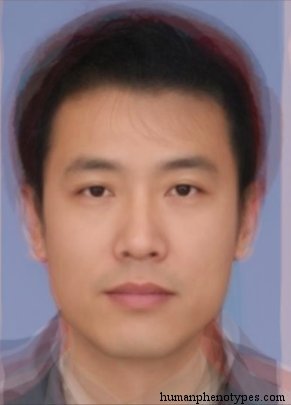
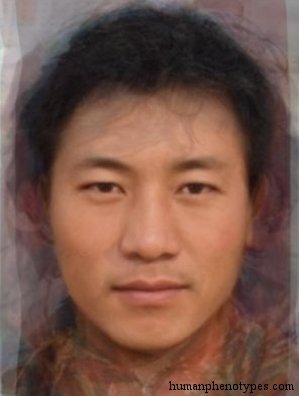
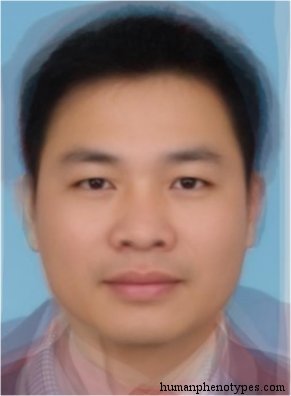
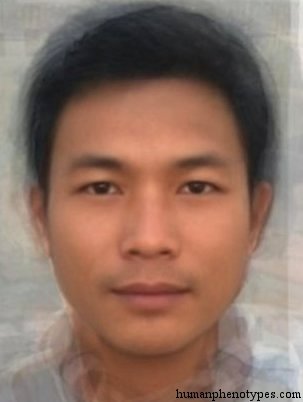
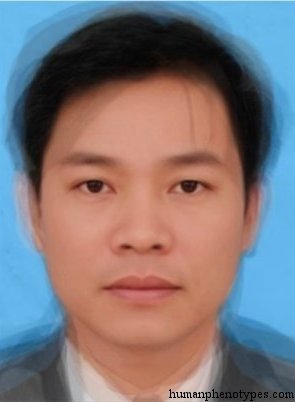
Changkiangid
Group Sinid
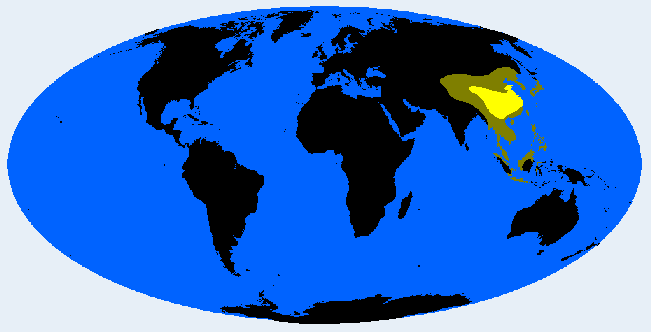
- common
- occasional
- rare
Description
Sinid subtype, named after the Chang Kiang (Yangtze) river in Central China. Today the most populous human variety in the world. Developed from the river and rice farmers in Central China. Typical in Kiangsu, Chekiang, Anhuei, Kiangsi, Hupei, Hunan, Szechuan, Kueichow, and Yunnan. Millennia of ancient colonisation and trading dispersed it across the Sunda Islands, Tibetan Plateau, and Indochina.
Physical traits
Light to brownish yellow, sometimes fair skin with coarse straight hair. Medium height, sometimes rather short, macroskelic, ectomorph. Mesocephalic, rarely brachycephalic, mildly hypsicranic. Depressed, lepto- mesorrhine, somewhat flattened nose with a broad bridge. The face is oval, relatively flat, cheekbones rather prominent. Lips thin, epicanthic folds common, eyes almond-shaped, body hair scant.
Literature
The type was defined and named by Liu (1937), the name was also used by later authors (Baker, 1981). Eickstedt (1944,1952c), Knussmann (1996) and many others named it Middle Sinid. Biasutti (1967) Sinica centrale, Lundman (1967) Kiangid.