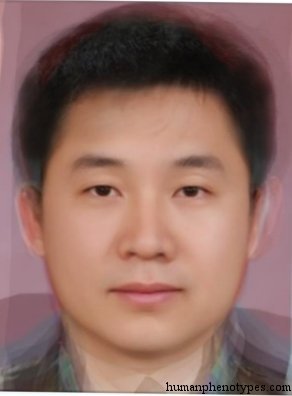
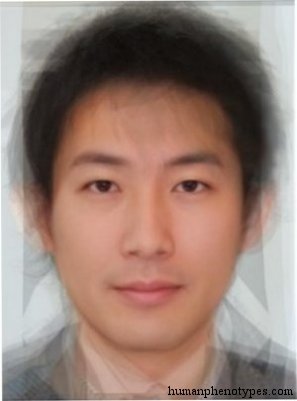
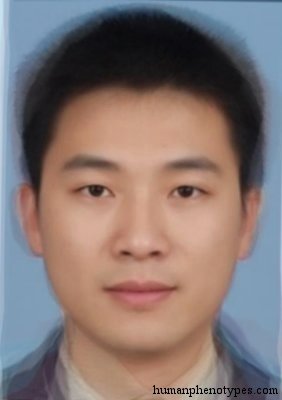
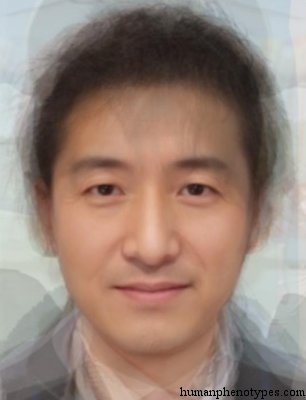
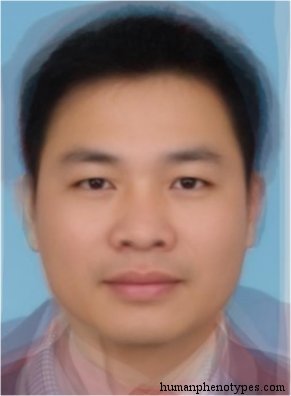
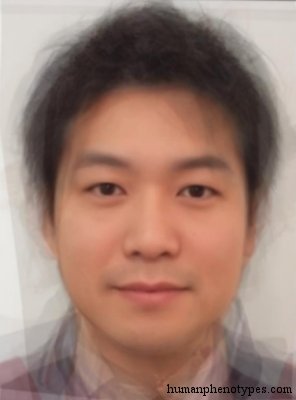
Huanghoid
Group Sinid
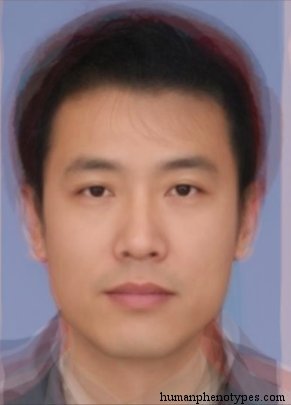
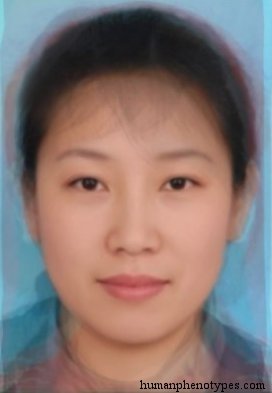
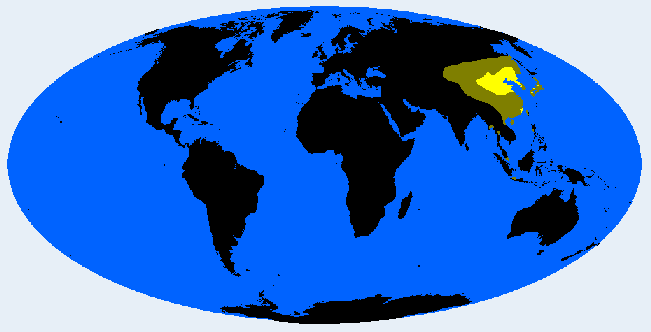
- common
- occasional
- rare
Description
North Sinid type, named after the Huang Ho (Yellow) river in Northern China. Developed from loess and millet farmers. Usually regarded as the Sinid proper, associated with the Xia dynasty and the beginning of the Chinese empire. Typical in Liaoning, Kirin, Heilungkiang and Jehol, sometimes Hoklo in Fuijan. Ancient colonisation and trading dispersed it across China, Manchuria, Mongolia, Korea, and more sporadically, Japan.
Physical traits
Pale yellow to dusky yellow-brown skin, straight hair. Medium height to rather tall, macroskelic, ectomorph to mesomorph. Mesocephalic, sometimes dolichocephalic, mildly hypsicranic with a leptorrhine, relatively long and straight, sometimes aquiline nose. The face is relatively high, oblong and square, 口-shaped. Cheek-bones relatively weak. Lips thin, epicanthic folds pronounced, body hair scant.
Literature
The type was defined and named by Liu (1937), "Huanghoid" was later used by others (Baker, 1981). Eickstedt (1934, 1944, 1952c), Knussmann (1996) and others named it North Sinid. Biasutti (1967) Sinica, Lundman (1967) Hoid, Cole (1965) North Chinese type.