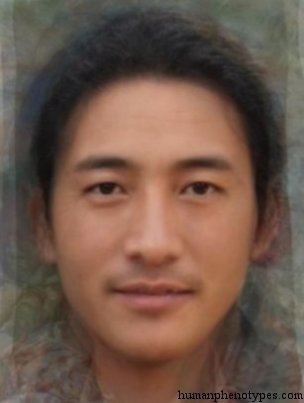
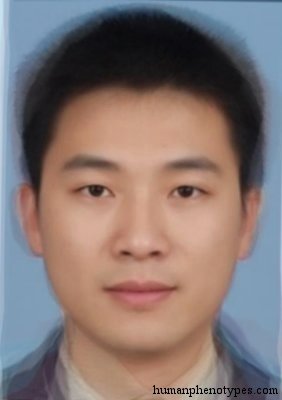
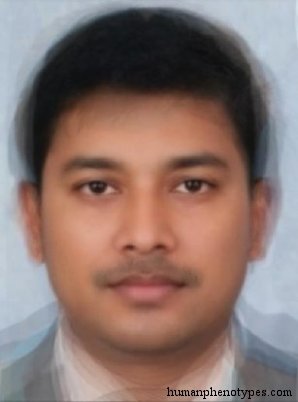
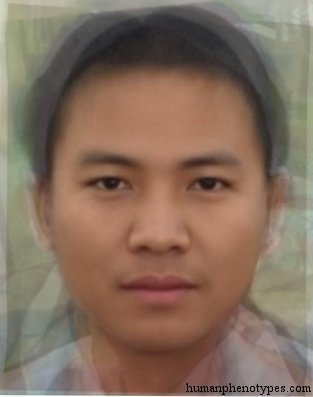
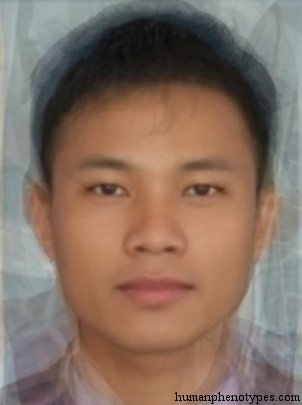
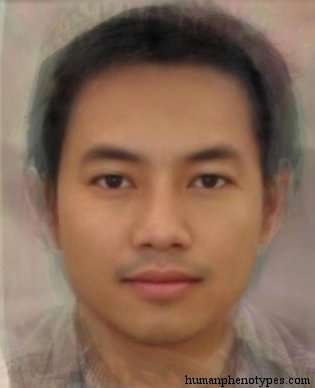
Shanid
Group South Mongolid
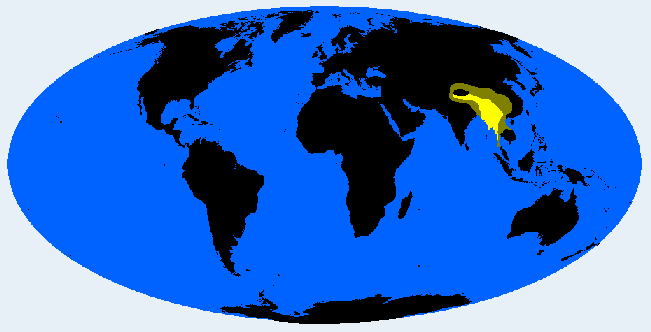
- common
- occasional
- rare
Description
Sinoid South Mongolid type, typical in the (Irrawaddy) plains and the Shan Plateau of Myanmar. The name derives from the Shan people, who migrated south from Yunnan in historic times and formed a powerful empire, soon outnumbering Palaungids and Veddoids. However, modern Shan are more mixed. Today most common in Burmese, but also in the hills of Yunnan, Southern China, and even Tibet (especially in the priest caste).
Physical traits
Yellowish light to medium brown skin with straight, sometimes wavy hair. Rather short, macro- mesoskelic, ectomorph. Brachycephalic, hypsicranic. Mildly leptorrhine. Face is not as flat as in Sinid and more elongated than in Palaungid, but still round, features are more refined and gracile, skin slightly darker. Mongolian fold common.
Literature
Eickstedt (1928, 1944) defined the type during his expeditions in South Asia, this was kept later (e.g. Heberer et al., 1969) The proper Shanid variety can be separated from a eastern one (Eickstedt, 1937). Lundman (1967) included it in Malaid. Biasutti (1967) called it "Birmana", Hooton (1946) in Malay-Mongolid, Montandon (1933) Tibetan-Sino-Indochinese.