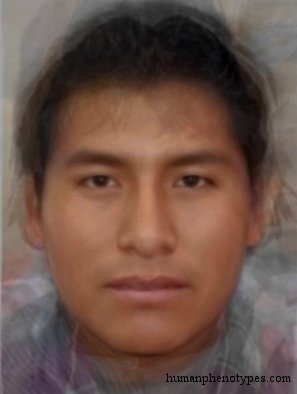
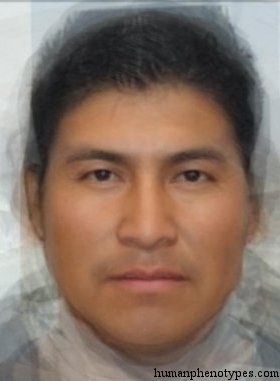
North Andid
Group Andid
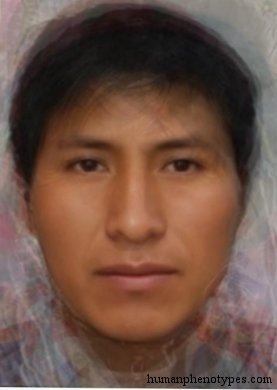
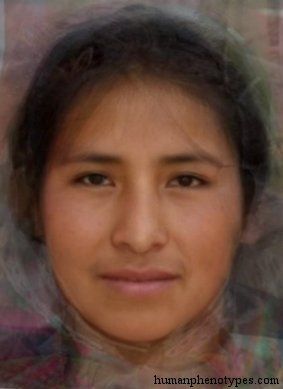
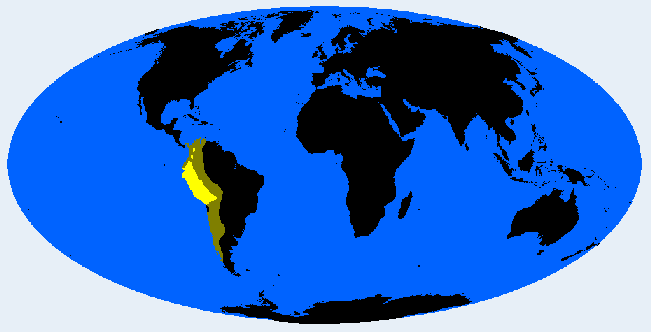
- common
- occasional
- rare
Description
The most important and numerous Andid subvariety, adapted to the high altitudes of the Peruvian and Ecuadorian Andes. Typified by Quechua. The dominant element in the ancient Inca Empire the largest in pre-Columbian America. Still the most numerous Native American type even today with more than 10 million individuals.
Physical traits
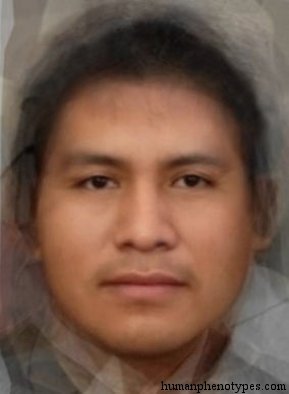
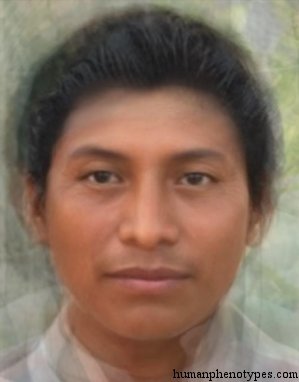
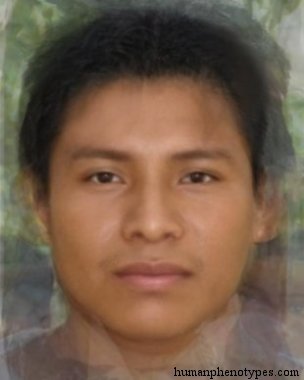
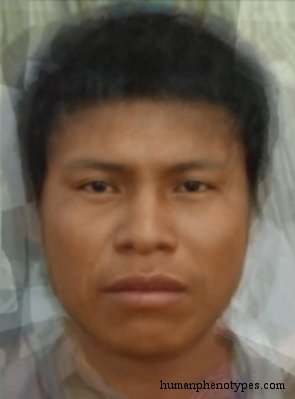
Medium, sometimes dark olive-brown skin with straight, sometimes wavy hair. Short, mesoskelic, endomorph to mesomorph with a large thorax, an adaption to the high altitude. Meso- brachycephalic, hypsicranic, rather small-headed. Mildly leptorrhine, long and often hooked nose that may appear Orientaliform. Large and long face with marked features, especially in men, often giving a serious expression. Chin relatively prominent, forehead receding. Eyes mildly slanted.
Literature
Defined as the Northern Andid variety by Eickstedt (1934) and Drexel (1955), based on earlier studies (e.g. Ferris, 1916). Part of Andid (Canals Frau, 1950; Lundman, 1967; Knussman, 1996) or combined with Pubelid in Pueblo-Andid (Imbelloni, 1952; Biasutti, 1967) / Pervuid (Lundman, 1943).