Central Andid
Group Andid
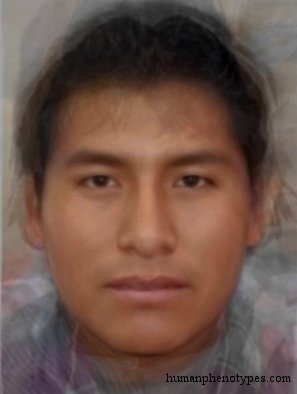
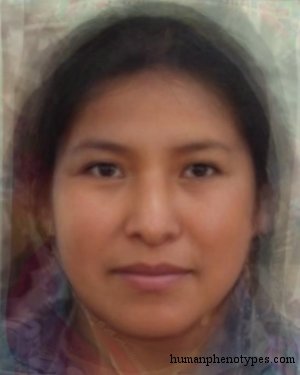
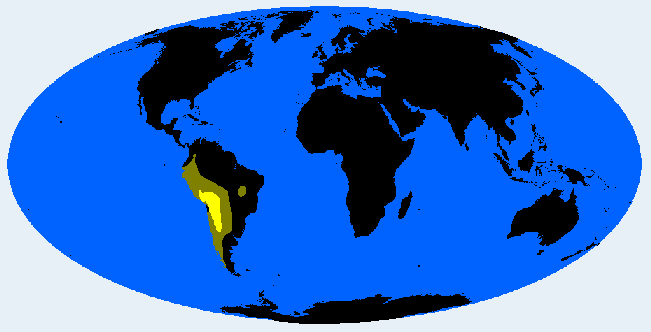
- common
- occasional
- rare
Description
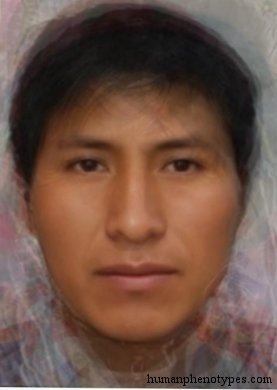
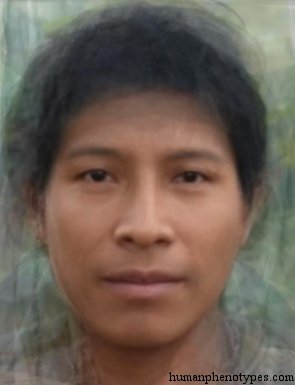
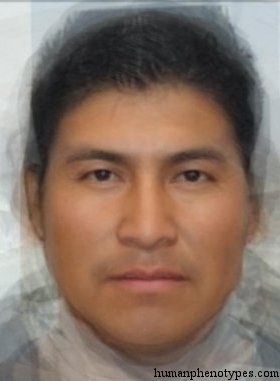
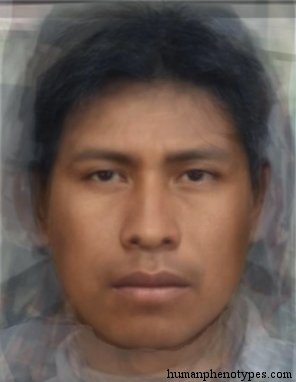
Andid variety, mostly native the Andes mountains from South Peru to Northern Chile. The large thorax and other traits indicate a significant adaption to high altitude. Typified by Aymara. Also common in Southern Quechua and Diaguita, sometimes in other Andean people like Uros, Peruvians, and Mapuche. Survived European colonisation relatively well and is still a dominant type of modern Bolivia.
Physical traits
Medium olive-brown skin, straight, rarely wavy hair. (Rather) short, endomorph, macroskelic with a very large thorax. Hypsicranic, meso- brachycephalic, rather small-headed. Mildly leptorrhine, sometimes long and convex nose. Compared to North Andid, body and face more robust, cheekbones stronger, face flatter, slanting eyes and Mongolian folds more frequent. Chin relatively prominent, forehead receding.
Literature
After detailed earlier descriptions (e.g. Sera, 1914), Eickstedt (1934) and Drexel (1955) defined it as the central Andid variety. Generally part of Andid (Canals Frau, 1950; Lundman, 1967; Knussman, 1996) or together with Pueblid in Pueblo-Andid (Imbelloni, 1952).