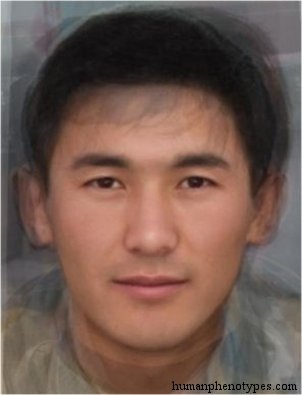
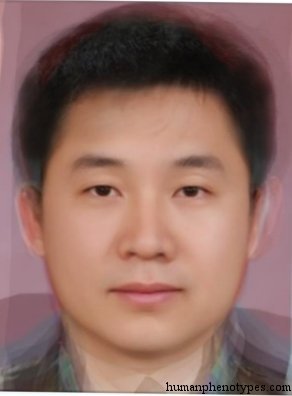
Baykal
Group Tungid
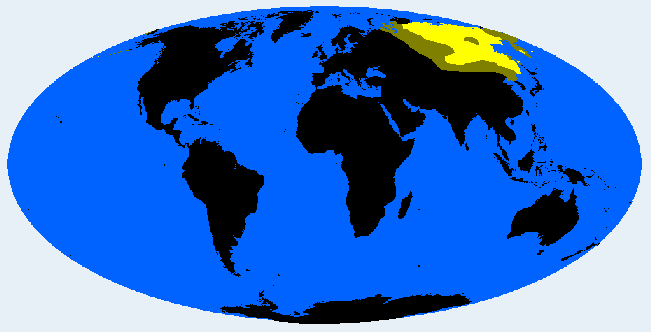
- common
- occasional
- rare
Description
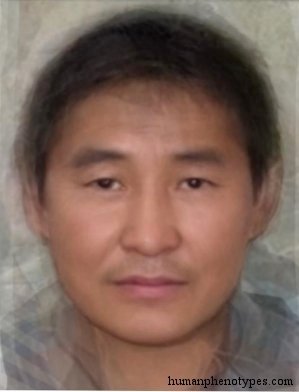
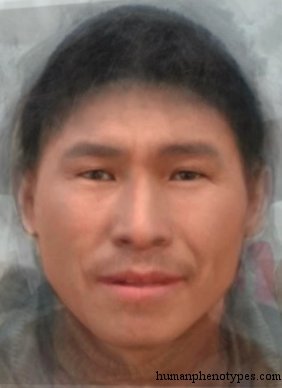
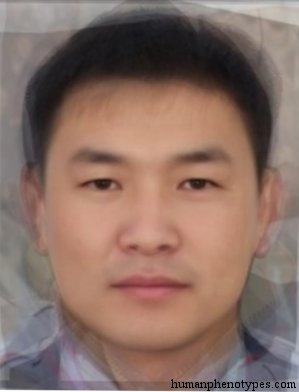
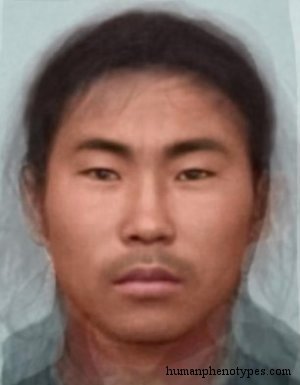
Northern Tungid variety, native to the vast, sparsely populated Taiga and Tundra regions of East Siberia, adapted to survive in the coldest habitable places on Earth. Named after the Baykal Lake. Typical for Evens, Eastern Evenks, Yukagirs, more mixed in Yakuts, Western Evenks, Orochs, Chukchis, Koryaks, and related people. Despite the extensive distribution, population is below 100,000.
Physical traits
Light yellowish-brown, sometimes fair skin with coarse straight, black, sometimes lighter hair and mixed eyes. (Rather) short, macroskelic, endomorph, sometimes ectomorph. Mesocephalic, chamae-, sometimes orthocranic, rather large-headed. Mildly leptorrhine, weakly prominent nose with a depressed root. Cheekbones protruding, face very flat, broad, body hair very sparse. Epicanthic folds very strong.
Literature
Originally placed in Paleosiberian (Bunak et al. 1941), it was later defined as a Baykal type (Debets, 1951, 1974; Levin, 1963; Alexeev, 1979). Together with other (e.g. Sibirid) types part of Lundman's (1967) Taigid and with Gobid part of Biasutti's (1967) Tungid proper.