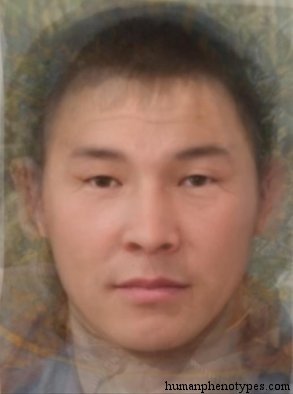
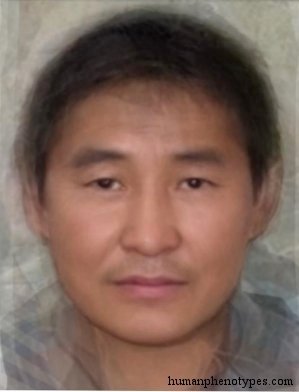
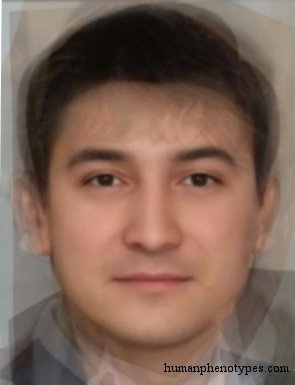
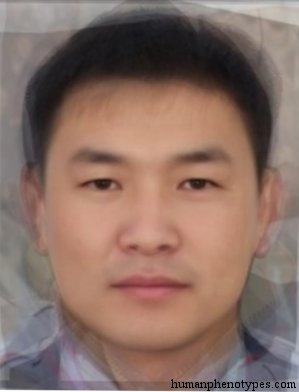
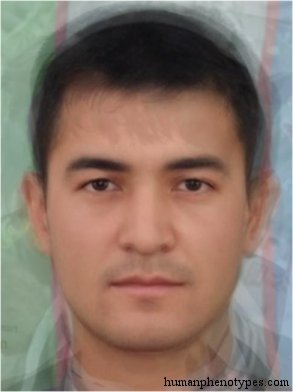
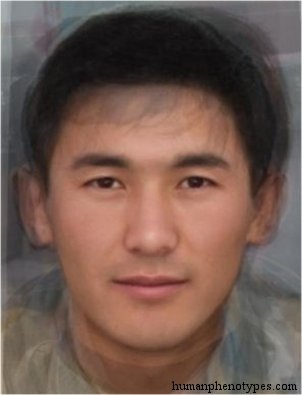
Aralid
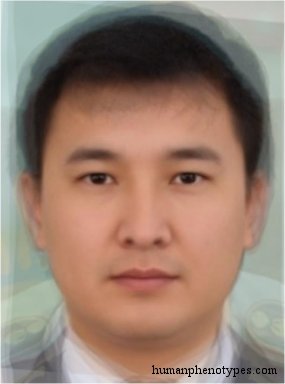
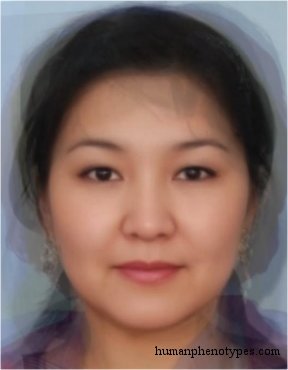
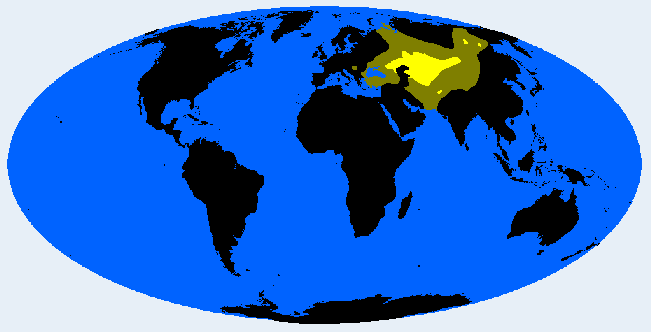
- common
- occasional
- rare
Description
West Tungid variety of the vast Central Asian steppes, influenced by Turanid. Developed in ancient times when Hunnic, Avar, and Chasar expansions replaced older Turanid, Mediterranid, and Nordid populations. Today most common in Kazakhs, but also in other Turkic people like Kyrgyz, Uzbeks, and Tatars. In lower frequencies in Yakuts, Nenets, Uyghurs, Mongols, and many others.
Physical traits
Light yellowish-brown skin, straight, sometimes wavy hair. Medium height, macroskelic, endomorph. Mildly leptorrhine, sometimes concave nose. (Hyper-)brachycephalic, chamae- orthocranic. Cheek bones very prominent, face and jaw broad, forehead slanted, eyebrows thick. Mongolian fold and facial flatness moderate.
Literature
Originally named Turko-Tatar (Deniker, 1900). After Schwidetzky's (1950) study Eickstedt (1952b) and Biasutti (1967) placed it closer to Tungid as "Aralid". Lundman (1967) named it Kumid. Oshanin's (1964) northwestern and Alexeev's (1979) Kazakhstanian South Siberian variety roughly identical. South Siberian or Altai-Caspian is also used by Levin (1963) and Bunak (1976).