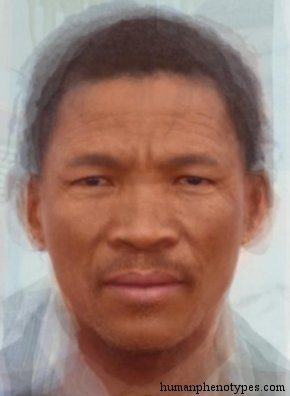
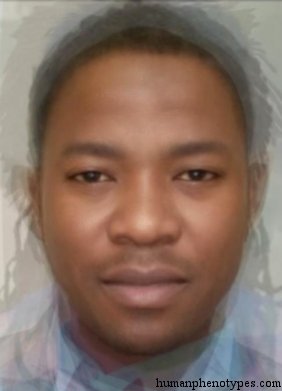
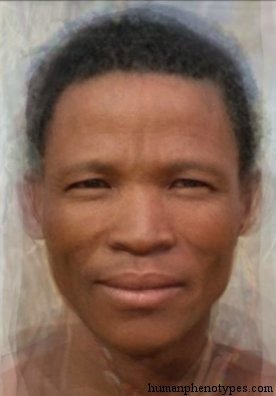
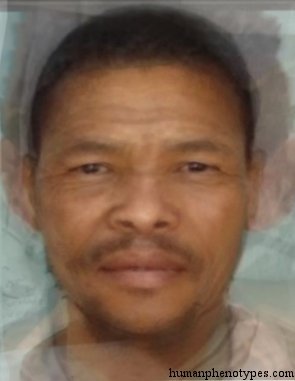
Karroid
Group Sanid
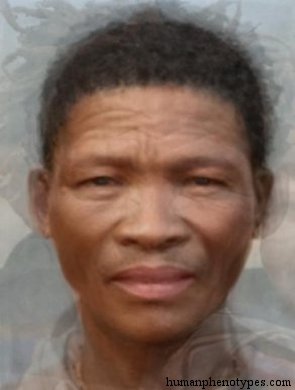
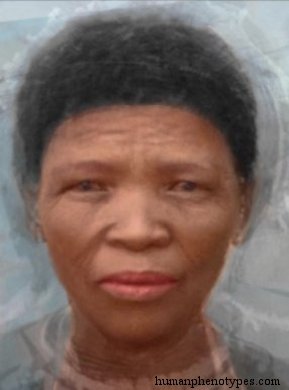
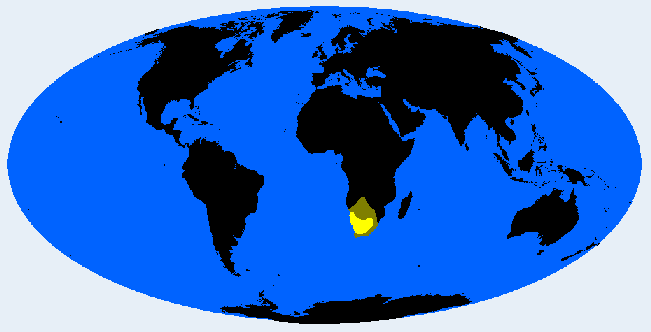
- common
- occasional
- rare
Description
Sanid variety, named after the Karoo desert. Very ancient and distinct with many unique features. Was dominant in Southern Africa some centuries ago until Bantu and European colonisation almost wiped it out. A few thousand remain among Taa speakers, Xam, Khomani, Karretjie, and Coloreds. Loss of culture and displacement could make it extinct very soon, like the similar, long-gone Strandlooper type.
Physical traits
Yellowish light or medium brown skin, heavily wrinkled in old age, peppercorn hair. Short, mesoskelic, ecto-, sometimes endomorph, sometimes steatopygic. Dolicho- mesocephalic, chamaecranic. Hyperplatyrrhine, depressed nose, wider than Kalaharid, convex upper lip. Eyes pseudo-Mongoloid, penis suberect, prognathy is very weak.
Literature
The southern Sanid was named Karroid by Lundman (1967). Described as a shorter and fairer Sanid variant by Eickstedt (1934). Part of Sanid for others (Baker, 1981; Knussmann, 1996). Like for Biasutti (1967), who called them Boscìmana. Schlebusch et al. (2012) confirm genetic distinctiveness and find relationships to Nama. .