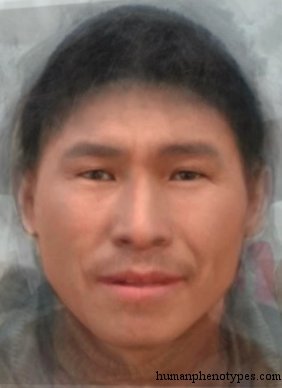
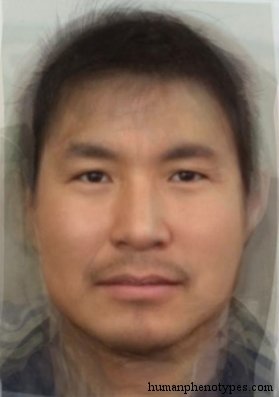
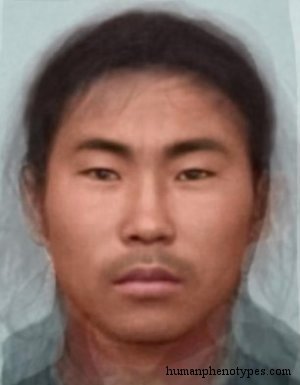
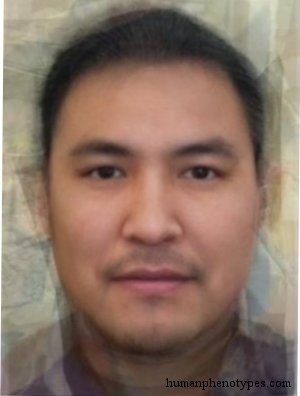
Bering Sea
Group Eskimid
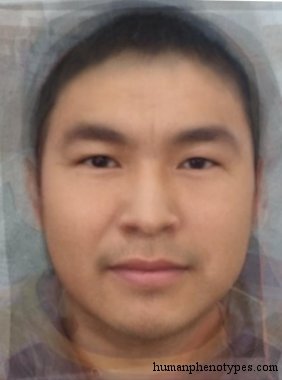
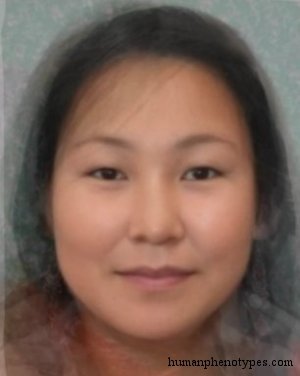
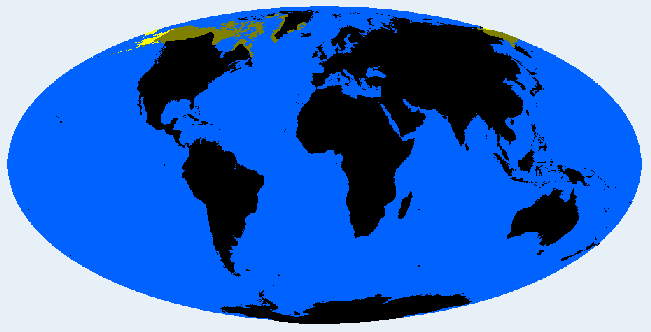
- common
- occasional
- rare
Description
Western Eskimid variety common in Alaska and along the Bering Strait, esp. St. Lawrence Island. The result of a relatively late migration to America. Eskimids show the most extreme adaptions to Arctic climate in the world. Typified by Alaskan and Siberian Yupik, sometimes in Alutiiq, Inuit, Aleuts, and coastal Chuckis, rarer in Kutchin and Ingalik. Native from Siberia to Greenland.
Physical traits
Light yellowish/reddish-brown skin with light or wavy black hair. Rather short to medium height, (hyper-)macroskelic, short-limbed, endomorph, muscular. Mesocephalic, ortho-, sometimes chamaecranic. (Mildly) leptorrhine, straight nose. Taller, wider-nosed and wider-skulled than Inuid. Cranial capacity very large, cheekbones prominent, hairiness moderate, Mongolian folds frequent.
Literature
Debets (1951) and Levin (1963) identified it in Asia as the Bering Sea type, an Arctic subtype. The latter separates Western and Eastern Eskimo following earlier works (e.g. Hrdlicka, 1930; Shapiro, 1931). Biasutti (1967) called it the Alaskan Eskimo subtype.